


Audi has revealed the GT50 Concept, a dramatic one-off creation that reimagines the raw spirit of 1980s IMSA race cars through a thoroughly modern performance lens. Designed and built by Audi’s apprentices at its Neckarsulm facility, the GT50 is not a static showpiece. It runs, drives, and functions as a fully engineered concept, rooted in the mechanical foundation of the Audi RS3.
Developed as a tribute to the 50th anniversary of Audi’s iconic inline five-cylinder engine, the GT50 serves as both a celebration of heritage and a glimpse into how retro motorsport design could influence Audi’s future performance models.
Audi GT50 Concept: Exterior Design & IMSA Heritage Influence

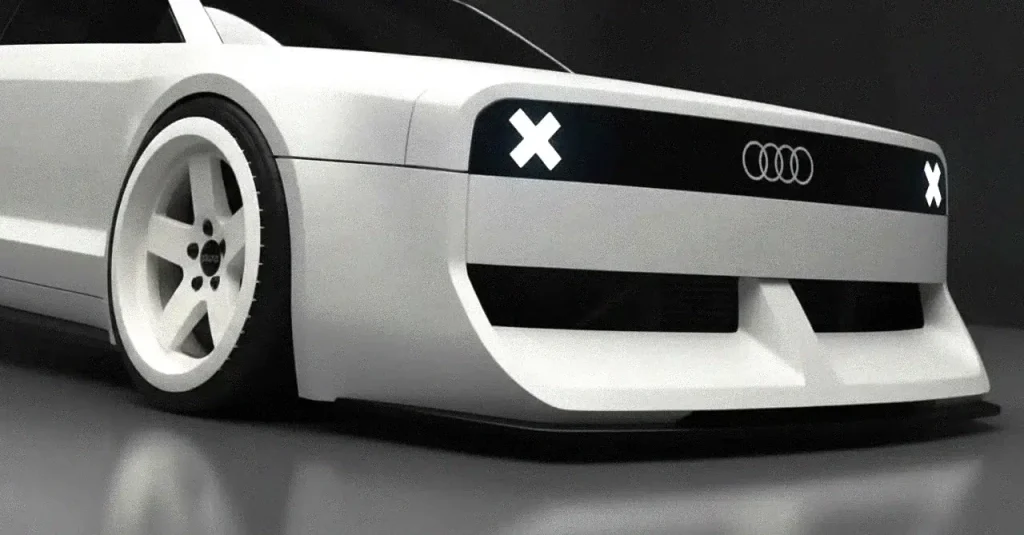
Visually, the Audi GT50 Concept is a direct nod to the brand’s IMSA GTO racers from the 1980s. The car features an ultra-wide stance, exaggerated wheel arches, clean surfacing, and a low-slung profile that immediately evokes endurance racing machines of the past.
Every exterior panel has been redesigned, including bespoke bodywork and oversized wheels that give the concept an almost digital, game-like appearance. A standout detail is the use of the actual roof panel from an Audi 80, reinforcing the car’s historical connection to Audi’s touring car era.
Signature X-shaped LED headlights & taillights give the GT50 a distinctive modern identity while maintaining visual links to classic race lighting signatures.
Interior Layout & Race-Focused Execution
Inside, the GT50 Concept adopts a pure motorsport approach. The cabin is stripped back, functional, and deliberately minimal, prioritizing weight reduction and driver focus over luxury.
The interior features racing-inspired materials, simplified controls, and a no-nonsense layout that mirrors the philosophy of classic IMSA cars. This is a cockpit designed for intent, not comfort, underscoring the concept’s authenticity as a working performance machine.
Audi GT50 Concept: Powertrain & Mechanical Foundation
At the heart of the Audi GT50 Concept lies the turbocharged inline five-cylinder engine from the Audi RS3. Power output is estimated at around 395 horsepower, delivered through RS3 running gear.
Crucially, this concept is fully operational. Audi confirms that the GT50 runs and drives, placing it in a rare category of concept cars that extend beyond design experimentation into real-world engineering execution.
Apprentice Program & Strategic Importance
Audi’s apprentice-built concepts have a proven track record of influencing production models. The RS6 GTO Concept, created by apprentices in 2020, eventually evolved into the RS6 GT, validating the strategic importance of these projects within Audi.
While the GT50 Concept itself is likely too extreme for direct production, it strongly suggests that retro-inspired RS models, particularly within the RS3 lineup, could be explored in the future. The overwhelmingly positive reception from over 3,200 Audi employees at its unveiling further reinforces the concept’s internal impact.
Middle East Pricing & Market Context
The Audi GT50 Concept is not a production vehicle and will not be sold in Middle Eastern markets. However, its RS3-based mechanicals make it highly relevant to the region’s performance car audience.
For reference, the Audi RS3 Sedan in GCC markets is typically priced between AED 280,000 and AED 320,000, depending on specification and market conditions. If Audi were to introduce a limited-run, GT50-inspired RS3 variant, pricing would likely exceed AED 400,000 in the Middle East, reflecting exclusivity, heritage value, and bespoke design elements.
The region’s strong appetite for limited-edition performance cars makes it a natural fit for any future heritage-driven Audi RS offerings.
Conclusion
The Audi GT50 Concept is a powerful reminder that heritage remains a vital creative force at Audi. By blending the brutal aesthetics of 1980s IMSA racers with modern RS3 performance engineering, Audi’s apprentices have delivered a concept that feels emotional, authentic, and forward-looking.
Whether or not it directly reaches production, the GT50 demonstrates how Audi’s past can meaningfully inform its future, especially in performance-driven markets like the Middle East where motorsport legacy continues to carry real value.

