


A New Home With A New Vision
After seven decades inside the iconic Glass House, Ford has officially begun its next chapter with an all-new world headquarters in Dearborn, Michigan. The move marks a profound shift for the Blue Oval, not just in architecture, but in culture, collaboration, and how the company wants its future to look. The new building, which officially opened on November 16 and will be fully complete by 2027, replaces the mid-century monument that has defined Ford’s identity since 1956. The new HQ now becomes the sixth in Ford’s history and the most ambitious yet, signaling the brand’s intent to modernize while keeping its legacy close.
Modern Scale & Massive Space
Ford’s new headquarters is enormous, a 2.1-million-square-foot structure spread across four levels, more than twice the size of the Glass House. About 2000 employees have already settled into the building, but capacity will nearly double to between 4500 & 5000 once fully operational. The layout is intentionally open, spacious, and built to enhance cross-team collaboration, something Ford has been pushing aggressively as it transitions deeper into electrification, software-defined vehicles, and modern manufacturing systems. Wide corridors, high-visibility workspaces, and interconnected zones allow different departments, design, engineering, R&D, and operations, to interface more naturally than at any Ford building before.
Design Studios With Purpose & Privacy
Six design studios lie at the heart of Ford’s new creative hub, arranged in three pairs. Each pair is visually connected so designers can observe each other’s progress, but from outside the studios, the sightlines are carefully engineered so visitors can’t peek at unreleased products. Ford’s architects even designed the flooring with intention: studio floors use a darker asphalt-like shade to mimic real-world conditions, grounding the design process in environments where Ford’s vehicles will actually live. It’s subtle touches like this, and the concealment-focused window angles, that reveal how deeply Ford has rethought the space for function, secrecy, and creativity.
Engineering Spaces Built Around The Vehicles
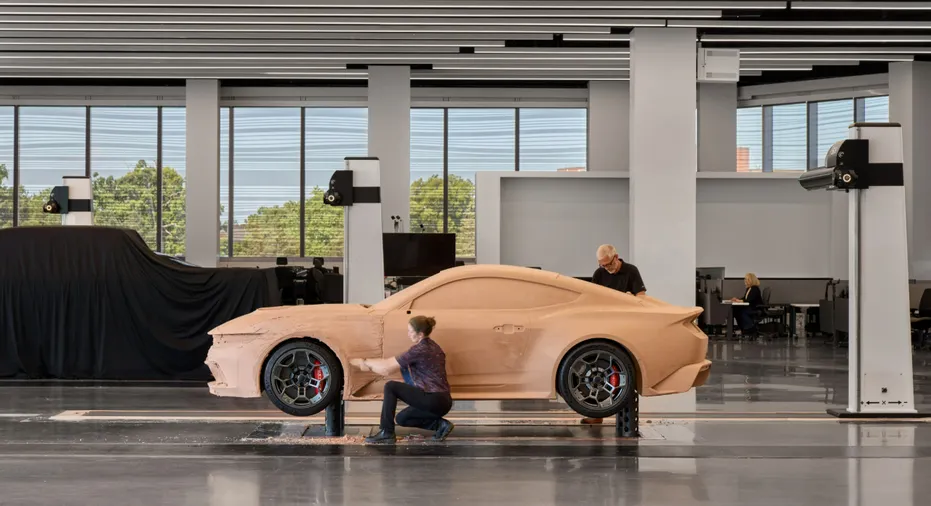
One striking choice Ford made was to allow cars to move freely within the building. To make that possible, all four floors were engineered to support the weight of an F-250, allowing nearly any Ford model, even a GTD, to be transported between levels using oversized freight elevators. The idea is simple: employees should see, feel, and interact with the finished product regularly. Ford believes exposure to the vehicles themselves will yield better decisions, tighter feedback loops, and stronger alignment between departments.
Architecture That Honors The Brand’s Legacy
From the outside, the new HQ looks like a modern glass structure, but up close, it becomes a tapestry of Ford history. The building’s exterior glazing is covered with thousands of tiny Ford ovals. Move closer still, and you’ll notice micro-etched sequences of characters. Those strings represent every patent Ford has ever filed, stretching from the Model T era to the electric, autonomous, and connected systems the company is patenting today. Each year, new patents will be added to the façade, turning the building into a living archive of Ford innovation. It’s a literal and symbolic reflection of where the company has been and where it’s going.
A Machine Shop With Soul & History
Inside the 200,000-square-foot machine shop, equipped with cutting-edge mills, clay modeling systems, and seven-figure tooling machinery, Ford has preserved a slice of its industrial past. When machinists temporarily paused operations during the relocation, they spent their downtime restoring vintage equipment. Among the restored machines is a fully functioning metal lathe from 1948, still used daily. The mix of old and new encapsulates Ford’s identity: advanced, forward-looking engineering built on a foundation of craftsmanship that stretches back more than a century.
Corporate & Retail Spaces Linked Together
The new headquarters is also designed to mirror Ford’s evolving customer-facing environments. Select furniture and interior design elements inside the new HQ are being shared with Ford’s next-generation dealerships across the U.S. & international markets. It’s part of a larger strategy to unify Ford’s brand image, from the place cars are designed to the place they’re bought.
Relevance To The Middle East & Expected Regional Impact
For GCC markets, particularly the UAE, Saudi Arabia, Qatar & Kuwait, where Ford SUVs and trucks remain strong sellers, this new headquarters signals a renewed commitment to design quality, vehicle capability, and customer-focused innovation. Ford’s Middle East lineup, including the F-150, Expedition, Explorer & Bronco, will benefit directly from the more efficient collaboration and advanced prototyping tools inside this new HQ. Regional distributors are also likely to see closer alignment with Ford’s global retail identity, especially as new dealership designs roll out internationally.
Conclusion
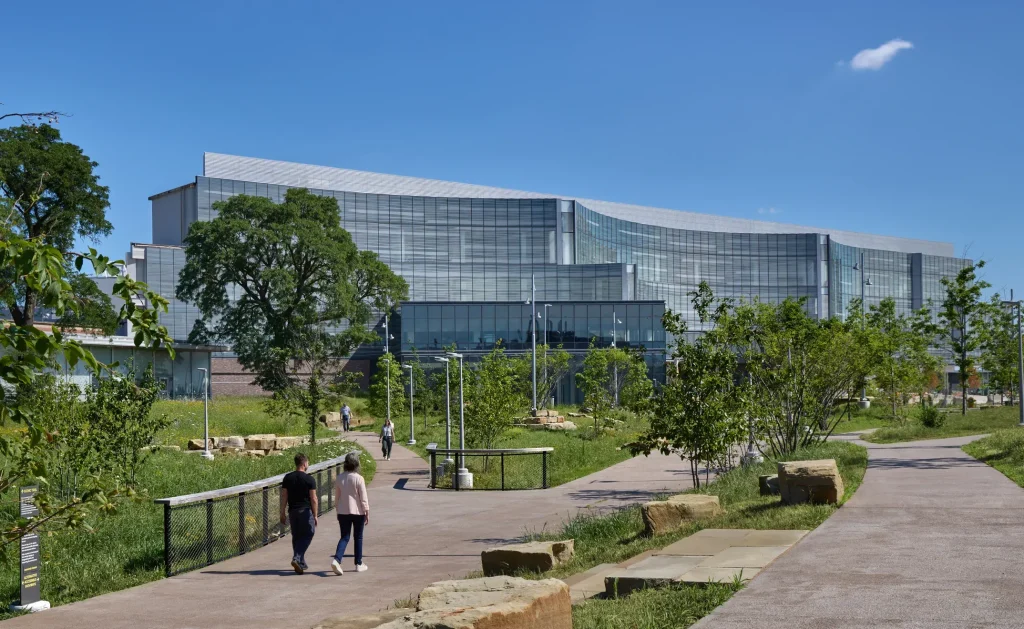
After 70 years under the Glass House, Ford’s move into its massive new headquarters marks a historic transition into a more collaborative, innovative, and future-ready era. The building embodies the company’s heritage through its etched patents and restored machinery, yet it is designed entirely around the needs of tomorrow’s vehicles, electric, intelligent, and globally competitive. For the Middle East and the world at large, this new home represents Ford sharpening its engineering edge, strengthening its product development cycle, and setting the stage for the next generation of Blue Oval vehicles.

