

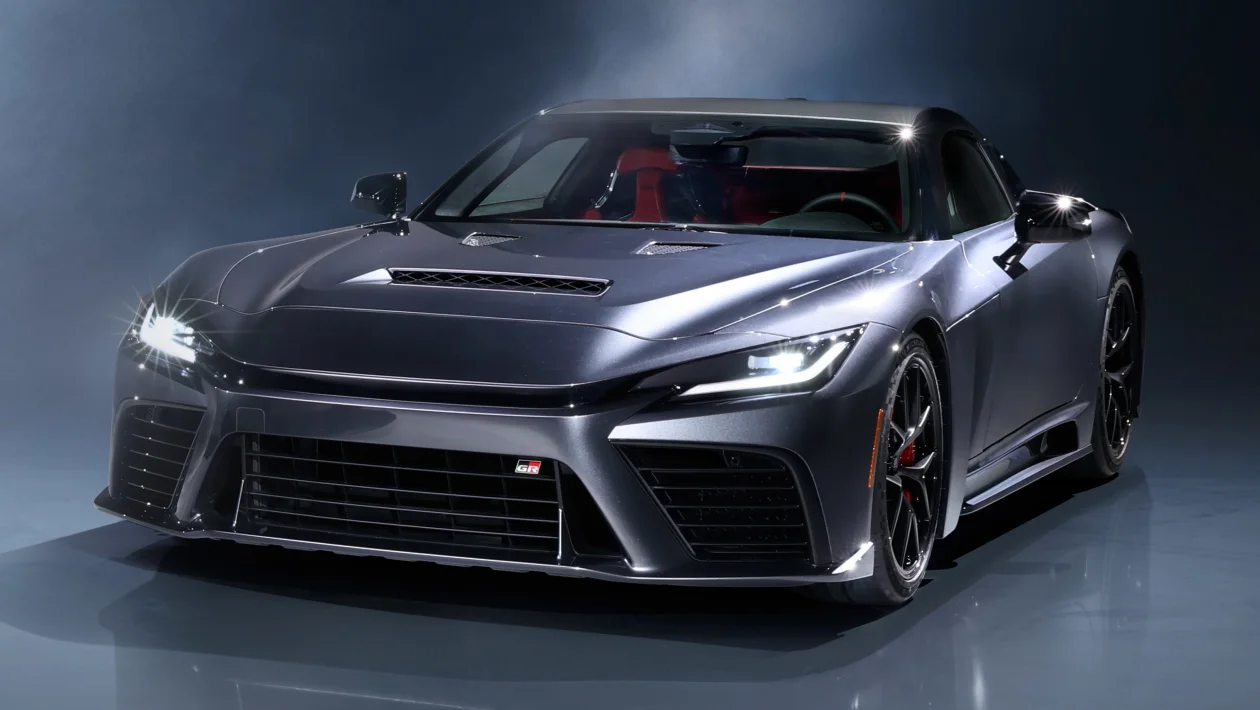
Toyota has entered the highest echelon of performance with the debut of the GR GT, a flagship supercar built to establish Gazoo Racing as a standalone performance identity within the Toyota universe. Created alongside the brand’s GT3 race car, the GR GT blends motorsport engineering with road-legal drama, emerging as the most extreme Toyota since the legendary LFA. For GCC buyers who value exclusivity, engineering depth, and reliability in their supercars, the GR GT represents one of the most significant Japanese performance launches of the decade.
GR Grows Into A Standalone Brand
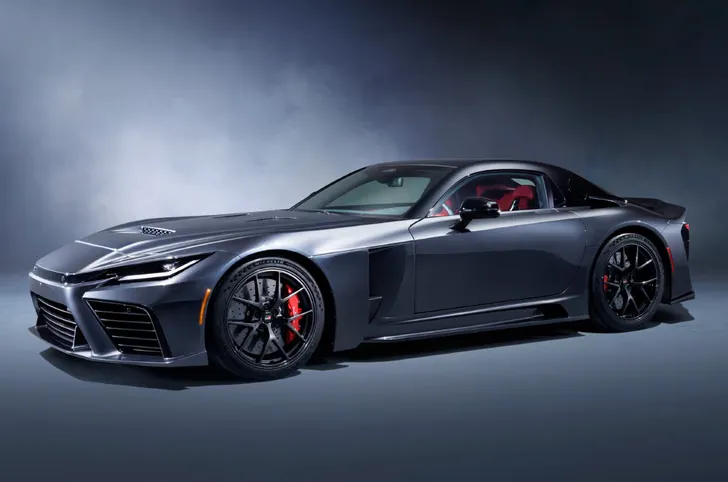
Gazoo Racing, once simply Toyota’s racing arm, now sits beside Toyota, Lexus & the upcoming Century brand as a core performance division. The GR Corolla, GR Supra & GR86 established the foundation, but the GR GT is the true halo. Its creation draws inspiration from the Japanese tradition of Shikinen Sengu, where structures are rebuilt to pass expertise to the next generation. The GR GT takes the spirit of the LFA and transfers its engineering wisdom forward, with designers tasked not just with making a fast car, but with building a long-term icon.
Hybrid Twin-Turbo V-8 With Race-Bred Muscle

Under the GR GT’s impossibly low nose sits Toyota’s first-ever twin-turbo V-8: a 4.0-liter short-stroke engine paired with an electric motor integrated into the rear transaxle. Combined output exceeds 641 horsepower and 627 LB-FT, with Toyota hinting that final figures may be even higher. The electric motor works through an eight-speed automatic using a wet clutch instead of a torque converter, improving response and allowing the hybrid system to integrate more directly with the engine. Power is sent to the rear wheels through a carbon-fiber torque tube housed in a carbon-fiber structure, giving the car stiffness comparable to a pure carbon monocoque. Toyota claims a top speed of nearly 320 KM/H, placing the GR GT squarely among the Ferrari 296, McLaren 750S & Porsche 911 GT3 RS.
Aluminum Megacasting Structure & Carbon-Fiber Craftsmanship

While the LFA relied on a largely carbon-fiber body, the GR GT uses a hybrid construction. Four massive aluminum megacastings anchor each corner of the suspension and connect into an aluminum structural core, while the hood, roof & rear bulkhead are made from carbon fiber. The outer panels mix aluminum with carbon-fiber door inners, allowing the GR GT to hit a curb weight of 1750 KG despite hybrid hardware. This combination gives the chassis high rigidity, lower cost compared to full carbon, and easier repairability, valuable benefits for owners in the GCC who regularly push their cars in hot desert conditions.
Suspension, Tires & Track-Ready Components
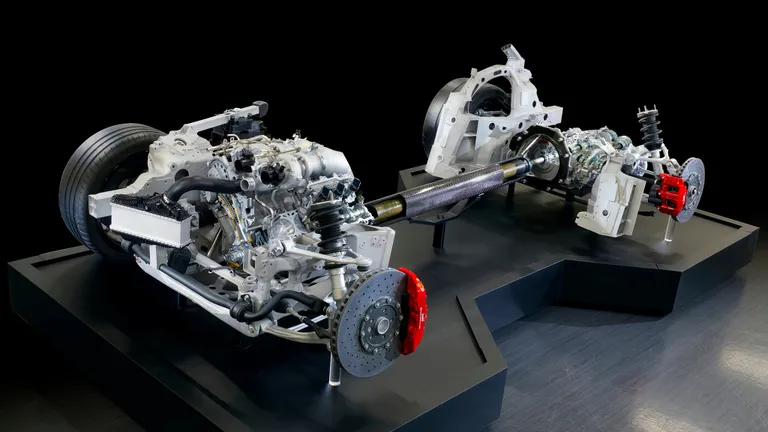
The front suspension uses a control-arm setup with 265/35R-20 Michelin Pilot Sport Cup 2 tires and large carbon-ceramic brakes with six-piston calipers. The rear uses a multilink layout with 325/30R-20 tires and matching carbon-ceramic rotors, oddly paired with a single-piston sliding caliper. Toyota’s engineers focused heavily on lowering the center of gravity, achieved through the low-slung engine, dry-sump system, and even pyrotechnic hood-lift components to meet pedestrian safety rules without raising the hoodline.
Design Presence & Interior Character

Visually, the GR GT brings hypercar energy with a stretched hood, compact glasshouse & wide stance. The black roof accentuates its length, while the sharp surfacing gives it an aggressive, almost predatory presence. The roof height is just 47 inches, around six inches lower than an AMG GT, and close to a Ferrari 296. Inside, the cockpit shows strong Lexus influence with a digital cluster and driver-centric layout. Visibility is limited, so Toyota uses a camera-based rearview mirror to give clearer rear vision, a practical advantage in GCC city traffic and high-speed cruising.
Launch, Markets & GCC Pricing Outlook
Toyota will position the GR GT as the hero model of the GR brand, selling it through Lexus dealerships in the United States and through dedicated GR channels in Japan. While Toyota has not officially confirmed GCC availability, the region is one of the world’s strongest markets for high-end performance cars, making UAE, Saudi Arabia & Qatar almost certain launch territories. Expected pricing in the GCC should fall between AED 1.3 million and AED 1.8 million, depending on options and local taxes. This positions the GR GT alongside mid-engined European exotics while offering Toyota’s unique blend of performance engineering & long-term reliability.
Conclusion

The Toyota GR GT marks a historic moment for Gazoo Racing and a bold step into the world of elite supercars. With its hybrid twin-turbo V-8, lightweight construction, dramatic design & motorsport influence, it stands as a modern embodiment of Toyota’s engineering ambition. For the GCC market, where high-performance luxury cars form a core part of automotive culture, the GR GT offers a compelling alternative to traditional European brands, backed by Toyota’s reputation for durability. It is not just a new supercar but the beginning of a new chapter in Toyota’s performance story.

