

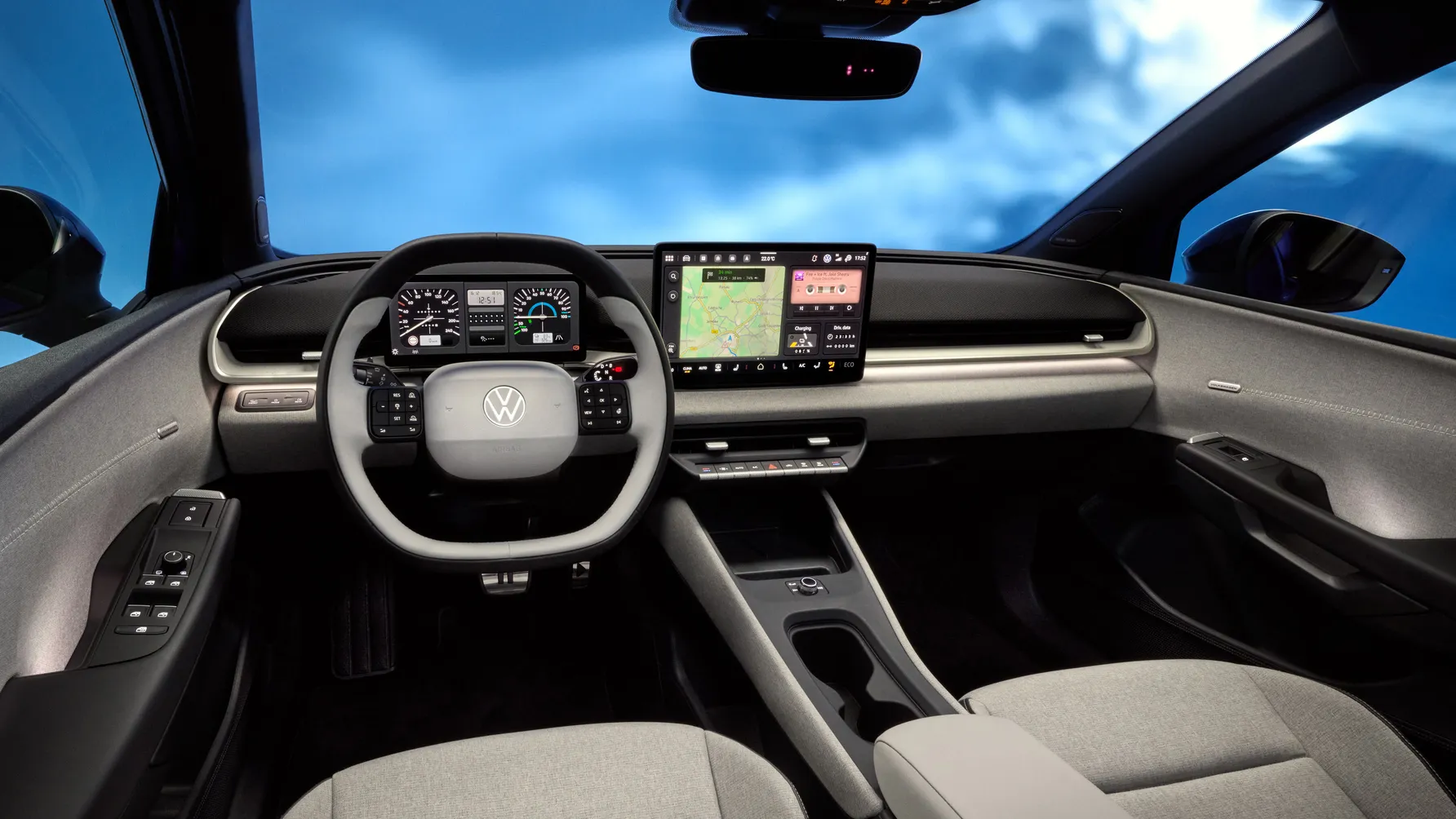
Volkswagen ID.Polo has officially confirmed a major shift in interior design philosophy. With the newly revealed ID. Polo, the German automaker, is moving away from touch-sensitive controls has officially confirmed a major shift in interior design philosophy. With the newly revealed ID. Polo, the German automaker is moving away from touch-sensitive controls and bringing back physical buttons. This change previews what future Volkswagen models, including those sold in the GCC, are likely to adopt.
Physical Buttons Make A Comeback At Volkswagen
The new cockpit design first appears in the refreshed Volkswagen ID. Polo, an electric hatchback sold in Europe. Inside, the cabin features real buttons on the steering wheel and physical switches across the dashboard. This marks a clear departure from the capacitive touch controls that have been widely criticized by owners.
Volkswagen has acknowledged customer feedback and usability concerns, especially complaints about distraction and poor responsiveness when driving.
Volkswagen ID.Polo: What’s New Inside The ID. Polo
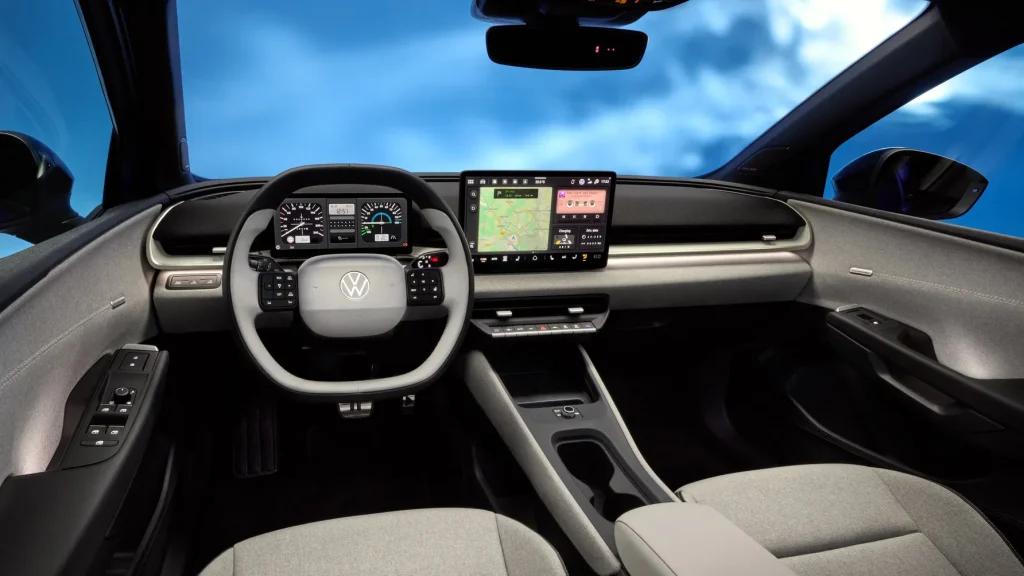
The steering wheel now uses traditional buttons for cruise control, audio functions, and menu navigation. These replace the touch-sensitive panels used in recent Volkswagen models. On the dashboard, climate controls such as temperature and fan speed are operated through physical switches positioned below the central screen.
Some secondary functions, including heated seats and rear defrost, still remain within the touchscreen interface. However, they now sit in a fixed and easily accessible area, reducing driver distraction.
Why Volkswagen Is Changing Direction

Volkswagen was one of the most aggressive brands in adopting haptic and touch-only interiors. While visually modern, many drivers found them frustrating to use, especially in real-world driving conditions.
By returning to physical controls, Volkswagen aims to improve safety, usability, and overall customer satisfaction. This move aligns with a broader industry trend where manufacturers are balancing digital displays with tactile controls.
What This Means For Future Volkswagen Models
Although the new cockpit has only been shown on the ID. Polo, Volkswagen has confirmed it will influence future models. The upcoming refresh of the ID.4 electric SUV is widely expected to receive this interior layout. Other electric models, including the ID. Buzz, may also adopt the same design language.
For petrol and hybrid models, Volkswagen has already begun reintroducing physical buttons in vehicles like the Golf and Tiguan, signaling a brand-wide correction.
Volkswagen ID.Polo: GCC Market Relevance
Volkswagen vehicles are popular across the GCC for daily commuting, highway driving, and family use. Physical buttons are especially valued in hot climates, where touchscreens can become less responsive and harder to use while driving.
A return to traditional controls is likely to be welcomed by Middle East buyers who prioritize ease of use, safety, and long-term reliability.
When Will GCC Buyers See This Interior
Volkswagen has not confirmed a rollout timeline for Middle East markets. However, if the updated ID.4 launches globally within the next year, GCC availability is expected soon after. The new interior philosophy is also likely to influence future petrol-powered Volkswagen models sold in the region.
Volkswagen ID.Polo: Why This Change Matters
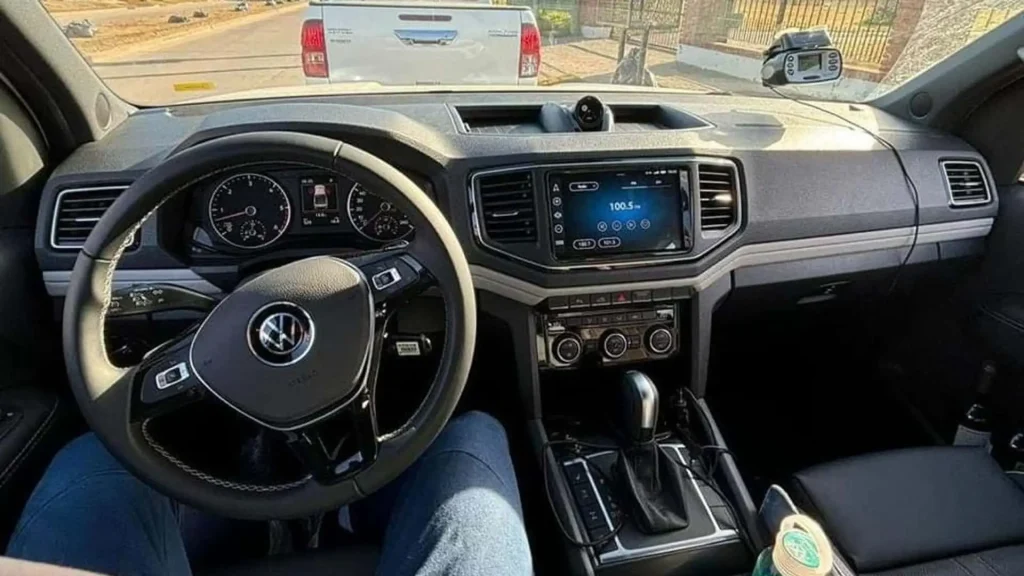
This move signals a rare and important shift where customer feedback has directly influenced design decisions. Volkswagen’s return to physical buttons is not just about nostalgia. It is about usability, safety, and making cars easier to live with every day.
For GCC buyers considering future Volkswagen models, this change could make upcoming vehicles far more appealing than recent touchscreen-heavy designs.

